We earn a commission if you buy through our links, at no extra cost to you.
Best Binoculars for Deer Hunting: 10x42 Picks
What to look for in deer hunting binoculars: low-light brightness, 10x42 vs 8x42, harness, waterproofing and tripod glassing, with five models worth a look.
At a glance
For deer hunting, the Vortex Viper HD 10x42 is a mid-range workhorse at 24.9 oz with a harness in the box. The Vortex Diamondback HD 10x42 is the lighter, lower-cost entry, and the Vortex Razor UHD 10x42 suits long western glassing sessions if you accept 32.2 oz. Look for 10x42, a sealed body and a tripod option.
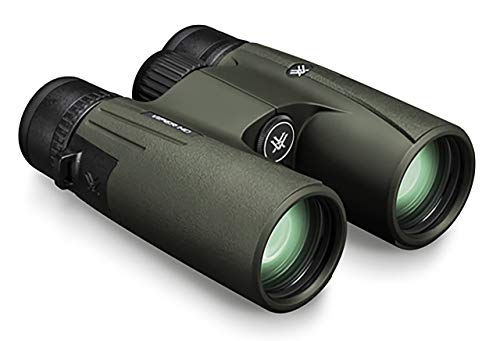

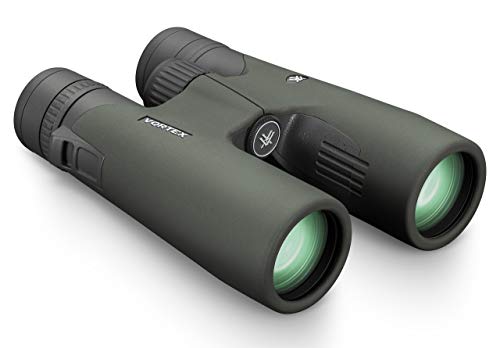
A deer hunter uses binoculars more than a rifle or bow. You glass at first light, again at last light, and in between you spend hours scanning edges, cuts and hillsides for an ear flick or a flash of antler. That is why the same few specs come up whenever hunters talk about “binoculars for deer hunting”: the size of the exit pupil, the weight on your chest and whether the body stays sealed in bad weather.
This guide covers those specs, then five binoculars from our 2026 binocular ranking that suit deer hunting. We compared manufacturers’ published specifications and published coverage by Outdoor Life and Field & Stream. We did not use the binoculars ourselves. Nothing here is legal advice, and we do not list legal shooting hours, which vary by state and season.
What Matters for Deer Hunting Binoculars
Low Light: Exit Pupil and Glass Quality
Deer move at dawn and dusk, so light-gathering matters. Field & Stream says a larger exit pupil helps in dim conditions, and that larger objective lenses add to low-light performance. It also says that if you want to see right up to the very edge of darkness, the extra size and weight may be worth it. Outdoor Life notes that a 50 mm objective has 42 percent more surface area than a 42 mm.
Exit pupil is the objective diameter divided by magnification. A 10x42 gives 4.2 mm, an 8x42 gives 5.25 mm. Brightness is not only a matter of big numbers, but a larger pupil is a real help once your eyes are dark-adapted.
10x42 or 8x42
For deer hunting, 10x42 is the usual choice. The extra power helps when you pick through a field edge or glass a far hillside. 8x42 is steadier by hand and gives a wider field, which many whitetail hunters prefer in timber. Outdoor Life’s whitetail binocular page notes that a 12x model gives a little more reach but shows hand shake unless you brace it or put it on a tripod.
Weight and the Harness
Weight adds up when you carry it for a full day on stand or on a hillside. The models below weigh 21.3 oz for the Vortex Diamondback HD 10x42, 24.9 oz for the Viper HD, 25.2 oz for the Zeiss Conquest HDX and 32.2 oz for the Vortex Razor UHD, all per the makers. Outdoor Life counts the GlassPak harness that ships with some Vortex models as part of their value.
Waterproof and Fogproof
Field & Stream’s roundup puts binoculars through submersion and a deep freeze, and even some premium models came out of it with a poor image. Look for a gas-filled body (argon or nitrogen) with O-ring seals. We list what the makers say. None of the maker pages we opened gave a depth rating for these models unless we say so below, so treat “waterproof” as rain and splash protection, not a dunk-it rating.
Tripod Glassing
At 10x, hand shake limits long looks. Several models on Outdoor Life’s whitetail list call out a front-hinge 1/4-20 tripod thread. A tripod, a shooting stick or just a tree trunk gives you a steadier picture and less eye strain. Tripod adapters are usually a separate purchase.
Binoculars We Would Look at for Deer Hunting
Vortex Viper HD 10x42: The Hunter’s Workhorse
A mid-range 10x42 at 24.9 oz with a 341 ft field, a GlassPak harness in the box and an argon-purged body.
According to Vortex, the Viper HD has a 341 ft field at 1,000 yards, 17 mm of eye relief, a 6 ft close focus and a weight of 24.9 oz. It has HD optics, XR Plus lens coatings, dielectric prism coatings and phase correction. The body is argon purged and O-ring sealed, and it is tripod adaptable. The GlassPak harness is in the box. Vortex also lists an unlimited, unconditional lifetime warranty.
It sits in the middle of our price range and is the binocular we would put first for most whitetail and mule deer hunters. Read the Vortex Viper HD 10x42 profile for the details.
Vortex Diamondback HD 10x42: The Lighter, Lower-Cost 10x42
A light 21.3 oz 10x42 with a 5 ft close focus and a harness in the box, for a first serious pair.
Vortex lists 21.3 oz, a 330 ft field, 15 mm of eye relief and a 5 ft close focus. It has HD optics, an argon-purged, O-ring sealed body and tripod adaptability, and the box includes a GlassPak harness. Vortex gives it the same unlimited lifetime warranty. The eye relief is shorter than the Viper’s, so check the fit if you wear glasses under your cap. Its light weight makes it the easiest carry of the three Vortex models here. See the Vortex Diamondback HD 10x42 profile.
Vortex Razor UHD 10x42: For Long Western Glassing Sessions
A premium magnesium-chassis 10x42 with a 346 ft field and a 4.5 ft close focus, built for glassing hours at a time.
Vortex lists Abbe-Koenig prisms, APO lenses, a magnesium chassis, XR Plus coatings, 16.7 mm of eye relief and a 346 ft field. It is argon purged, and it weighs 32.2 oz, which is the trade-off. Vortex gives it an unlimited lifetime warranty. Hunters who sit and glass big country will accept the weight. The Vortex Razor UHD 10x42 profile covers who should skip it.
Zeiss Conquest HDX 10x42: The Upper-Mid All-Rounder

A 25.2 oz magnesium-body 10x42 with Zeiss HD glass, 90% light transmission and an easy-access tripod interface.
Zeiss lists a 345 ft field, 90 percent light transmission, T* and LotuTec coatings, a magnesium housing and a waterproof, fogproof, shockproof body, nitrogen filled, with removable eyecups and a locking diopter. Close focus is 6.6 ft. It costs more than the Vortex models here, and it is the pick for a hunter who wants Zeiss glass without paying SFL or Swarovski prices. See the Zeiss Conquest HDX 10x42 profile.
Leupold BX-4 Pro Guide HD Gen 2 8x42: For Timber and Close Cover

A 24.5 oz 8x42 with a 376 ft field, a 5.25 mm exit pupil and a built-in tripod port.
If you hunt hardwoods or thick cover, an 8x42 gives you a wider field and a brighter exit pupil. Leupold lists 376 ft, 18 mm eye relief, 24.5 oz and a rotatable 1/4-20 tripod port. Close focus is 8.7 ft. Leupold’s guarantee page says it will repair or replace a product that does not perform, whether or not you are the original owner. Our Leupold BX-4 Pro Guide HD Gen 2 profile has more.
Which One Should You Pick?
- Most whitetail and mule deer hunters: the Vortex Viper HD 10x42.
- First serious pair, lightest carry: the Vortex Diamondback HD 10x42.
- Long western glassing, if weight is no concern: the Vortex Razor UHD 10x42, ideally on a tripod.
- Upper-mid Zeiss glass: the Zeiss Conquest HDX 10x42.
- Timber and thick cover: the Leupold BX-4 Pro Guide HD Gen 2 8x42.
Field Habits That Help More Than Specs
Glass slowly. Break the landscape into strips and scan each one, then go back. Brace the binocular against a tree, a rest or your knees. Keep lens covers on when you walk. Check your state wildlife agency’s current regulations before the season for legal hours and other rules, since we do not list them here.
Sources
- Outdoor Life: best binoculars for whitetail hunters
- Field & Stream: best binoculars
- Vortex Viper HD 10x42 official product page
- Vortex Diamondback HD 10x42 official product page
- Vortex Razor UHD 10x42 official product page
- Zeiss Conquest HDX official product page
- Leupold BX-4 Pro Guide HD Gen 2 8x42 official product page
Frequently asked questions
Are 10x42 binoculars good for deer hunting?
Yes, 10x42 is the most common size for deer hunting. Ten power helps you pick apart a field edge, a ridge or a bean field, and 42 mm objectives keep the body at a carryable size. The trade-off is a 4.2 mm exit pupil and more hand shake than an 8x42, so brace yourself against a tree or use a tripod for long looks.
Should I get 8x42 or 10x42 for whitetail in thick woods?
If most of your hunting is in timber and close cover, an 8x42 gives a wider, steadier view and a brighter 5.25 mm exit pupil. The Leupold BX-4 Pro Guide HD Gen 2 8x42 lists a 376 ft field. If you hunt open country or glass across fields, 10x gives more reach.
Do hunting binoculars need to be waterproof?
Rain, snow and cold are routine on deer hunts, so a sealed body matters. Field & Stream's binocular roundup includes a weather-resistance check in which each pair is submerged and then put in a deep freeze. Vortex lists the Viper HD, Diamondback HD and Razor UHD as argon purged and O-ring sealed. Zeiss lists the Conquest HDX as waterproof, fogproof and shockproof.
Do I need a harness for hunting binoculars?
Not required, but many hunters like one, because it moves the weight off your neck and keeps the binocular from swinging when you move or climb. The Vortex Viper HD and Diamondback HD 10x42 both list a GlassPak harness in the box, per Vortex.
Can I put 10x42 binoculars on a tripod?
Several can. Vortex lists the Viper HD, Diamondback HD and Razor UHD as tripod adaptable, with the adapter sold separately where noted. The Leupold BX-4 Pro Guide HD Gen 2 has a built-in 1/4-20 tripod port. Zeiss lists an easy-access tripod interface on the Conquest HDX.
What are legal shooting hours for deer?
They vary by state and by season, and they change from year to year. We do not list them here. Check your state wildlife agency's current hunting regulations before you go.